
Post #018 – AI In Microsoft ERP
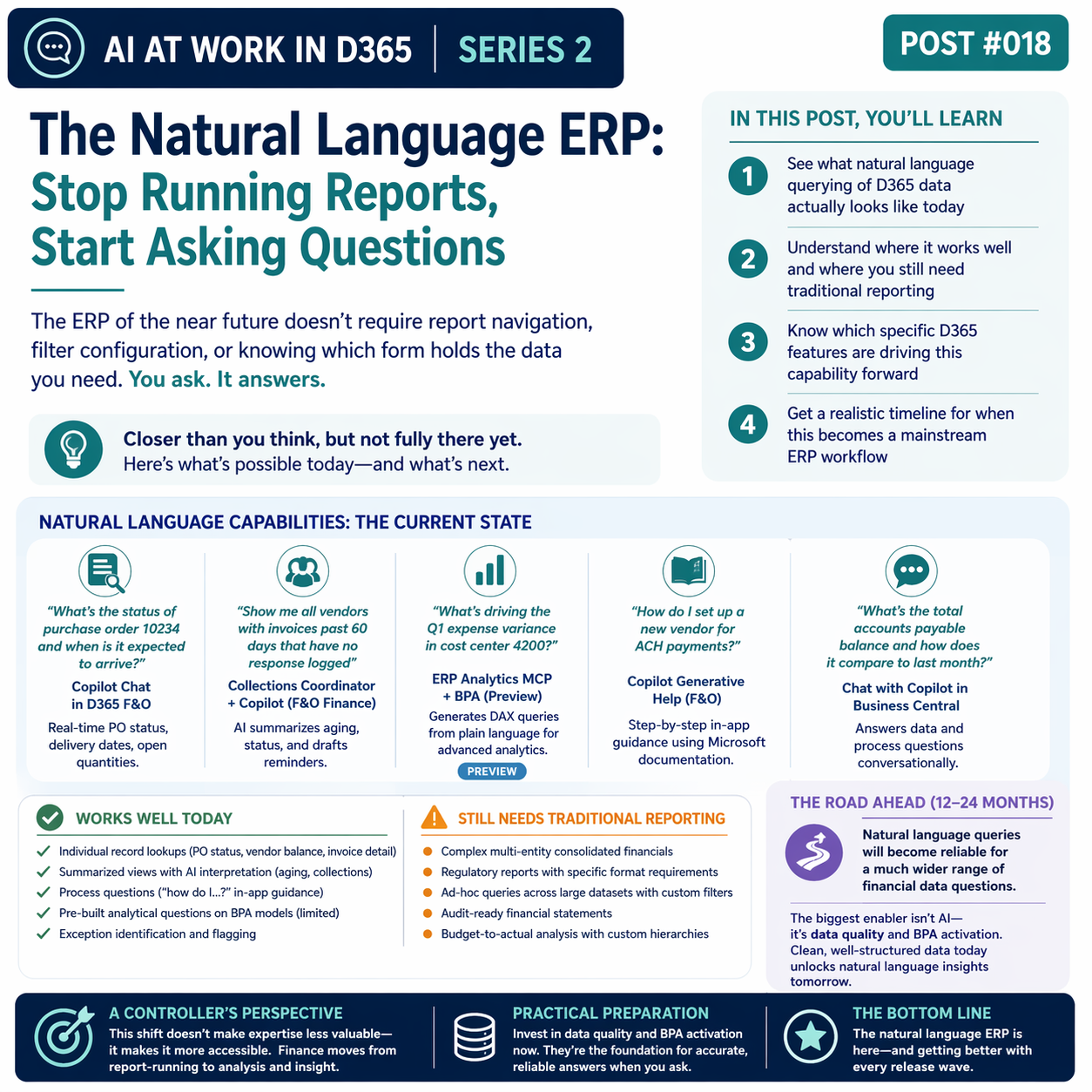
The ERP of the near future doesn’t require report navigation, filter configuration, or knowing which form holds the data you need. You ask. It answers. Here’s how close that future actually is in D365.
What “Natural Language ERP” Means Right Now
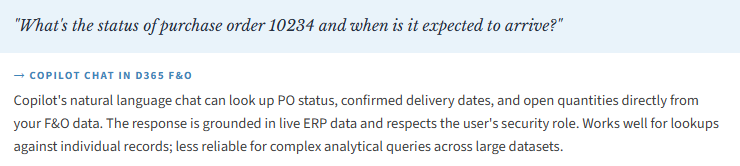
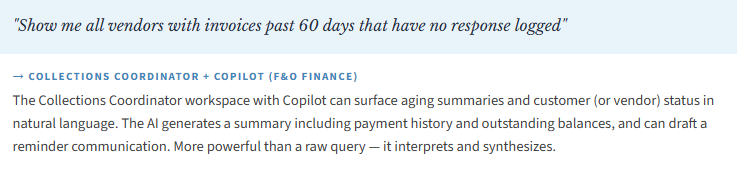
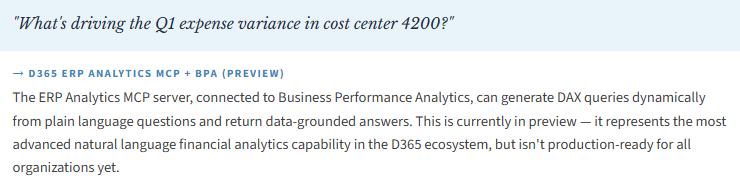
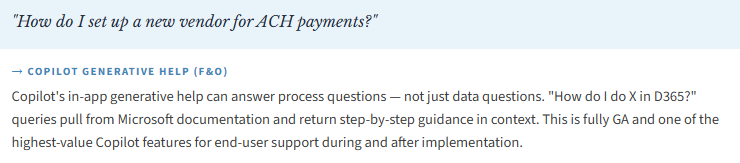
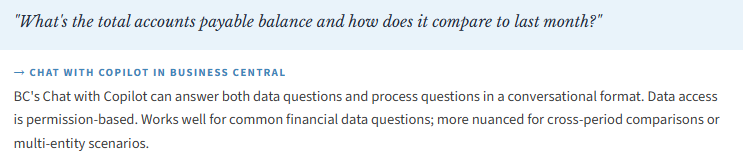
Natural language querying in D365 isn’t a single feature — it’s a set of capabilities that have been building across Copilot releases, each adding a piece of the picture. Let me walk through what’s actually available today, organized by where it sits in the D365 ecosystem.
Natural Language Capabilities: The Current State

Where Natural Language Works Well — And Where It Doesn’t Yet
✓ Works Well Today
- Individual record lookups (PO status, vendor balance, invoice detail)
- Summarized views with AI interpretation (aging, collections)
- Process questions (“how do I…?” in-app guidance)
- Pre-built analytical questions on BPA models (limited)
- Exception identification and flagging
Still Needs Traditional Reporting
- Complex multi-entity consolidated financials
- Regulatory reports with specific format requirements
- Ad-hoc queries across large datasets with custom filters
- Audit-ready financial statements
- Budget-to-actual analysis with custom hierarchies
What the Roadmap Suggests for the Next 12–24 Months
The trajectory is clear from the Wave 1 investments: Microsoft is expanding natural language data access at every layer — more data exposed through MCP, more analytical capability through BPA and the ERP Analytics MCP server, more in-app Copilot coverage across modules. The likely direction over the next 18–24 months is that natural language queries become reliable for a much wider range of financial data questions, with the traditional report navigation path becoming the fallback for complex or formatted output requirements rather than the default.
The limiting factor isn’t primarily the AI capability — it’s the data structure. Organizations with well-maintained master data, consistent account coding, and structured dimensional data (like what BPA provides) will be able to use natural language analytics much earlier and more reliably than organizations where the underlying data is inconsistent.

📚 Go Deeper — Microsoft Resources
- Copilot Chat and Natural Language in D365 F&O
- Chat with Copilot in Business Central
- ERP Analytics MCP — Natural Language Queries Over BPA (Preview)
- Generative Help and Guidance — In-App Process Questions
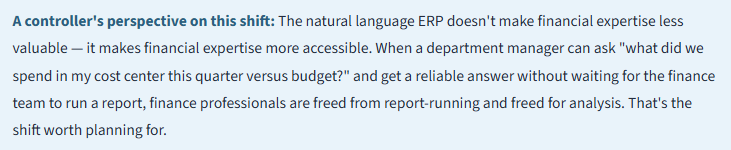
The natural language ERP isn’t a distant vision — it’s a current-state capability that’s expanding with each release wave. The gap today is in complex analytical queries, formatted financial output, and organizations with messy underlying data. The path to closing that gap runs through data quality, BPA activation, and the MCP analytics server as it moves from preview to GA. Organizations that invest in those foundations now will get the most from natural language capabilities as they mature.
BB
Bobbi Bricker
ERP Capability Lead and D365 Functional Architect at Centric Consulting. Former controller. This series reflects fifteen + years in ERP (as an end user and a Consultant) and a genuine belief that AI, used thoughtfully, makes finance and operations teams more capable — not less. Reach out with questions, pushback, or war stories from your own organizations.
Thank you for reading!
Interested in learning more? Below are some of my latest posts:

Leave a Reply