

The ten recurring Finance mistakes observed across BC implementations of every size, the root cause behind each one, and the practical corrections that transform a BC implementation from a transaction-processing system into the Finance infrastructure the organization actually needs. A capstone for the BC Finance Series.
“I want to step back from the module-by-module depth and share what I actually see when I walk into a BC environment 12 to 24 months after go-live. The system is usually working in the narrow sense—transactions are posting, invoices are going out, payments are being received. The question I am there to answer is different: is BC doing what it was designed to do for Finance, or is Finance doing in Excel what BC was designed to do? The answer is almost always some of both. There are ten patterns I see repeatedly. They cross every industry, every company size, every implementation partner. They are not technical failures—BC is not broken in any of these organizations. They are Finance engagement failures: decisions made early that foreclosed capabilities that could have changed how Finance operates, or capabilities built correctly and then not maintained. My hope for this series is that Finance teams read these posts before the go-live decision is final, not after the first audit. That is where the real leverage is.”
The Ten Patterns

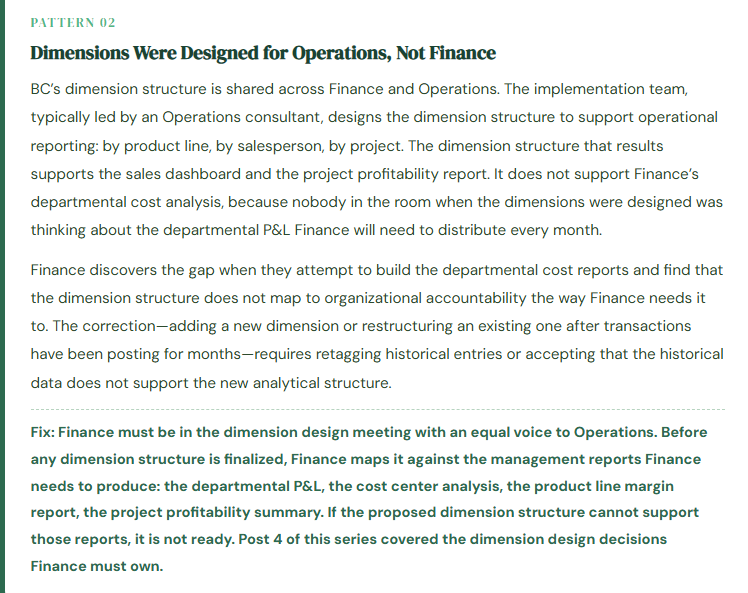
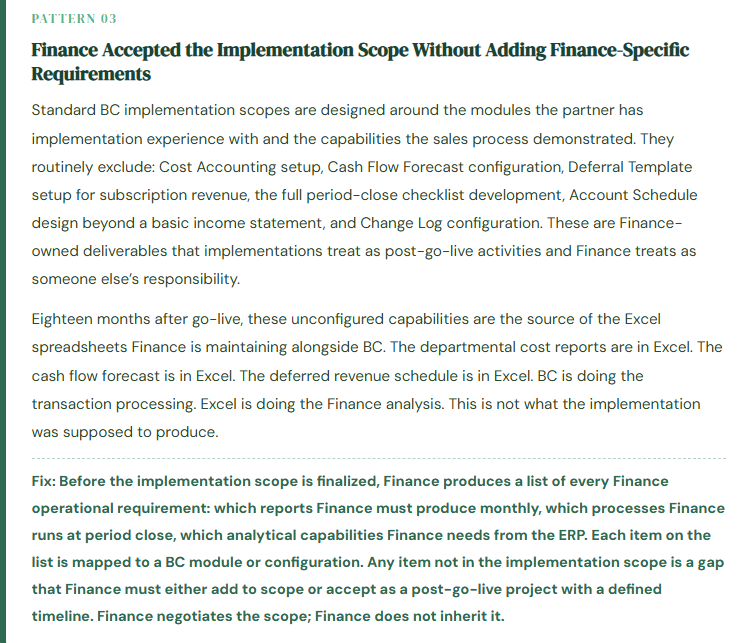


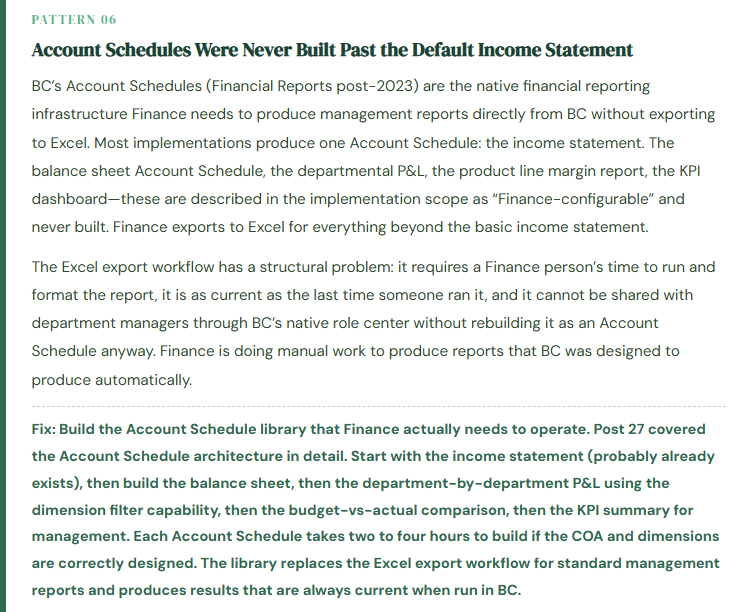

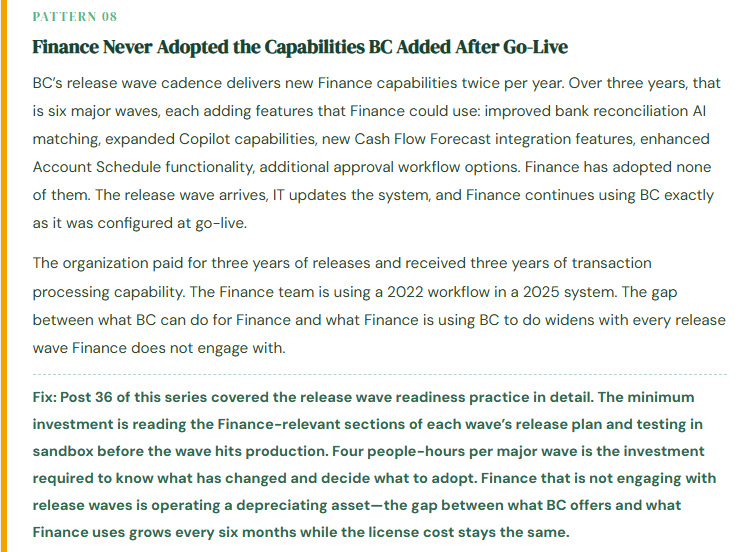


What I hope Finance teams take from my series of posts: BC is a capable Finance platform. The capability is not automatic—it is built through Finance decisions made at implementation, maintained through Finance governance after go-live, and extended through Finance engagement with every release wave. The organizations that get the most from BC are not the ones with the most technical resources. They are the ones with a Finance team that treats BC as a Finance platform they own and manage—not a software system IT maintains and Finance uses. That distinction is the entire difference between a BC implementation that transforms Finance operations and one that replaces a prior system while leaving the Excel habit intact. This series was written for Finance teams who want the former. Every post was written with that Controller in mind—the one who is in the room when the decisions are made, who asks the right questions during implementation, who builds the close checklist and maintains it, who runs the quarterly access review, who tests in sandbox before the wave hits production, and who treats BC as the Finance infrastructure the organization deserves.
— Bobbi
D365 Functional Architect · Recovering Controller
Thank you for reading!
If this post helped you solve a real problem, share it with a Finance colleague who is in the middle of an ERP implementation or a post-go-live optimization. If you have a topic that I haven’t covered, please reach out. There is always one more post worth writing.
If you enjoyed my writing and want to learn more, below are some of my latest psots:
Leave a Reply