
AI in Microsoft ERP · Project Operations · Series 3 · Post #022
AI in D365 Project Operations: From WBS to Margin Analysis
Project-centric organizations carry a unique set of AI opportunities — and risks. Here’s what Copilot and AI agents are actually doing in D365 Project Operations today, and where the margin intelligence story is heading.
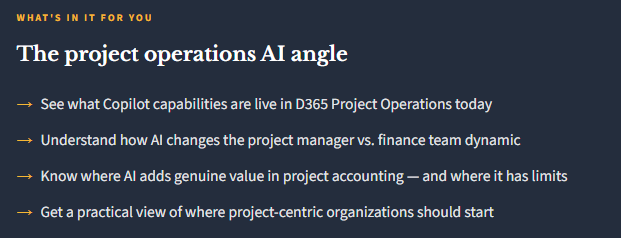
What’s Available in D365 Project Operations Today
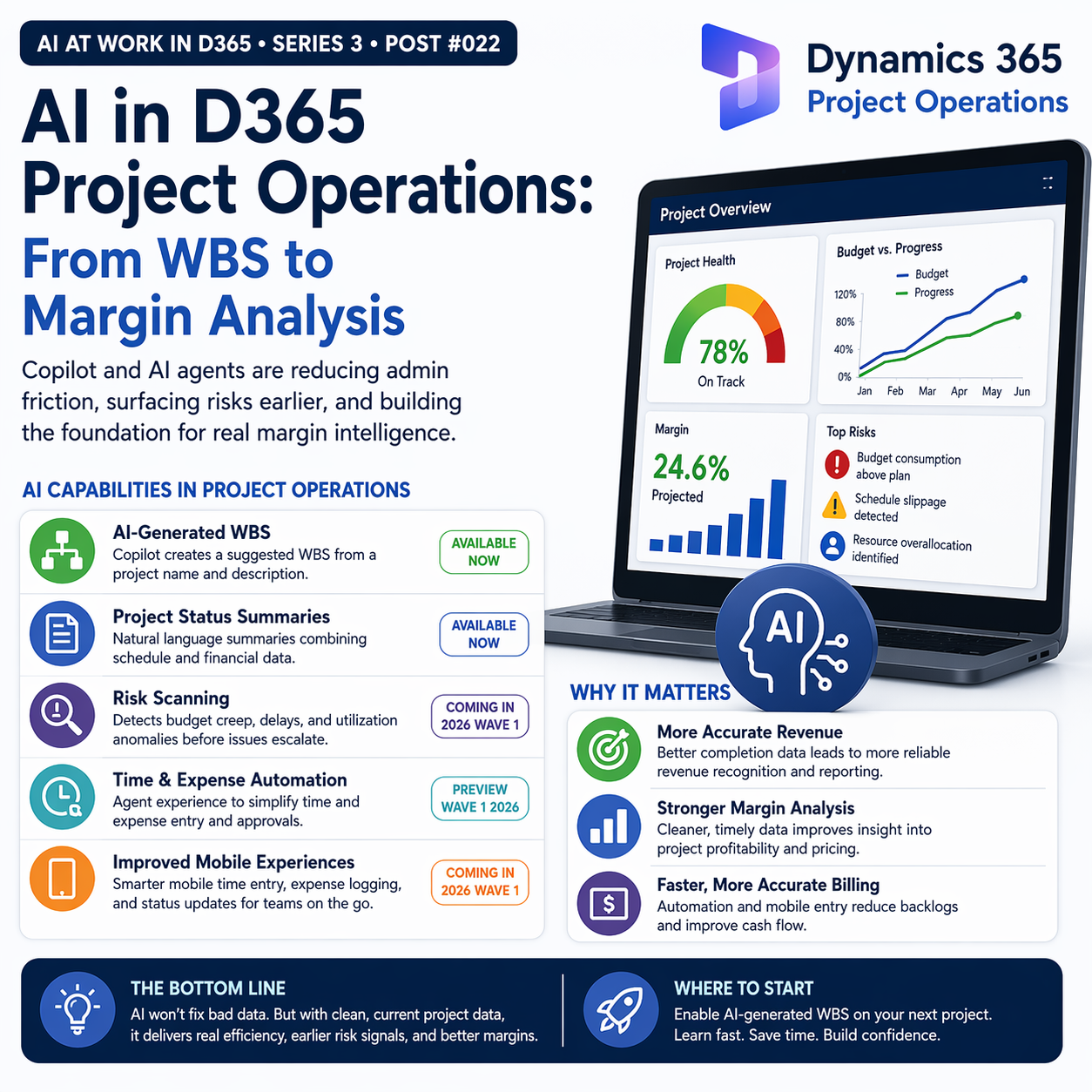
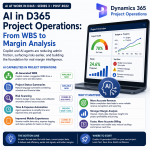
📋 AI-Generated Work Breakdown Structure (WBS)
Give Copilot a project name and a brief description, and it generates a suggested WBS using natural language processing — task structure, phases, and deliverables based on project type patterns. This isn’t a replacement for the project manager’s expertise, but it’s a credible starting point that can cut initial planning time significantly. Available now.
📊 Project Status Summaries
Copilot generates natural language summaries of project status — combining scheduling data and financial data into a coherent project health narrative. Useful for project managers who need to brief stakeholders without spending an hour pulling the deck together, and for practice managers reviewing a portfolio of active engagements.
⚠️ Risk Scanning for Budget Creep and Schedule Patterns
Copilot in Project Operations can scan for patterns like recurring delays, budget consumption pace versus project completion percentage, and resource utilization anomalies. These risk signals surface proactively — before they become over-budget conversations with the client. Available in 2026 Wave 1 updates.
⏱️ Time and Expense Automation (Preview)
An agent experience for managing time and expense entry and approval is in preview as of Wave 1 2026. The goal is reducing the “administrative tax” on project teams for T&E compliance — one of the most universally complained-about parts of project-based work.
📱 Improved Mobile Experiences
Project Operations’ mobile capabilities are getting AI-enhanced improvements in Wave 1, making time entry, expense logging, and status updates more fluid for field-based and client-site teams. This is a usability improvement with real adoption implications — the biggest source of bad project data is friction in data entry.
The Finance Team’s Stake in Project AI
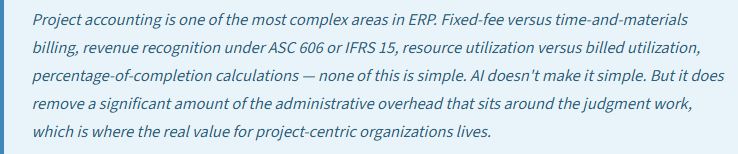
I want to make the finance case specifically, because project operations AI is often framed as a project manager problem. For finance and controllers at professional services or project-centric organizations, the downstream impacts are direct.
Revenue recognition accuracy. Percentage-of-completion revenue recognition requires reliable project completion data. When AI surfaces budget-versus-completion misalignments early, the controller gets more accurate completion estimates for revenue recognition — before the close crunch. That’s a real audit and reporting benefit.
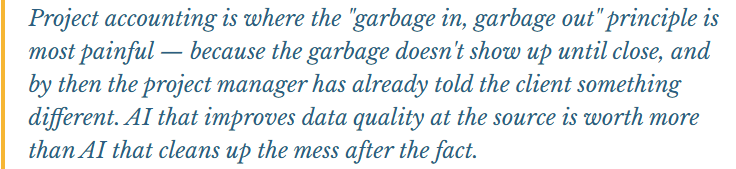
Margin analysis quality. Project margin analysis is only as good as the cost data that’s been entered accurately and on time. AI that reduces T&E friction and improves mobile entry accuracy directly improves the quality of the margin data finance teams use to evaluate project profitability and resource pricing decisions.
Billing cycle accuracy. Project billing depends on milestones, time entries, and expense approvals being current. AI automation in the approval workflow and better mobile time entry reduces the billing backlog that creates revenue timing issues at period close.
The Margin Intelligence Opportunity
The longer-horizon opportunity for AI in project operations is what I’d call margin intelligence — the ability to analyze project performance patterns across a portfolio and surface insights about which project types, client segments, resource configurations, and contract structures generate the strongest returns. This is currently a heavily manual, periodic exercise at most project-centric organizations. It requires pulling data from Project Operations, combining it with HR and finance data, and doing the analysis in Excel or Power BI.
With Business Performance Analytics and the ERP Analytics MCP server (covered in Posts 13 and 14), the data infrastructure is being built to make this kind of analysis conversational — asking “which project types have the highest margin variance and what are the common factors?” and getting a data-grounded answer. That’s not fully there yet. But the architecture is being built to support it, and organizations that are collecting clean project data today will be best positioned to use it when the analytics layer matures.


📚 Go Deeper — Microsoft Resources
- Copilot Features in D365 Project Operations — WBS generation, summaries, and more
- Agents, Copilot, and AI in D365 Apps — Project Operations section
- D365 Project Operations 2026 Wave 1 Release Plan
AI in D365 Project Operations is maturing across the full project lifecycle — from initial WBS planning through to margin analysis. The highest-value near-term improvements are in reducing administrative friction (T&E entry, time capture, approval routing) and surfacing risk signals earlier. The longer-term opportunity is genuine margin intelligence across a project portfolio. Both require the same foundation: clean, current project data.
BB
Bobbi Bricker
ERP Capability Lead and D365 Functional Architect at Centric Consulting. Former controller. This series reflects fifteen + years in ERP (as an end user and a Consultant) and a genuine belief that AI, used thoughtfully, makes finance and operations teams more capable — not less. Reach out with questions, pushback, or war stories from your own organizations.
Thank you for reading!
Interested in learning more? Below are some of my latest posts:
- AI and Fixed Assets in D365: Smarter Capitalization, Depreciation, and Disposal
- AI in D365 Project Operations: From WBS to Margin Analysis
- AI and Cash Management in D365: Finance Insights, Payment Predictions, and the Treasury Opportunity

- Reading the Roadmap: Microsoft’s AI Vision for ERP in 2026–2027

- AI and ERP Security: What Copilot Means for Your D365 Security Roles and Internal Controls
Leave a Reply