
AI in Microsoft ERP · Intercompany Accounting · Series 3 · Post #024
Intercompany accounting is where even well-implemented D365 environments generate the most close-cycle pain. AI doesn’t make the complexity go away — but it changes how much of it lands on your team.
Intercompany accounting is the topic that makes experienced controllers either very confident (because their setup is clean and automated) or very quiet (because they’re still reconciling manually at month-end and they don’t want to talk about it). If you’re in the second group, this post is specifically for you. AI doesn’t fix a broken intercompany design – but it can meaningfully accelerate a good one, and it can help you diagnose why a struggling one keeps breaking.
Intercompany accounting is the topic that makes experienced controllers either very confident (because their setup is clean and automated) or very quiet (because they’re still reconciling manually at month-end and they don’t want to talk about it). If you’re in the second group, this post is specifically for you. AI doesn’t fix a broken intercompany design — but it can meaningfully accelerate a good one, and it can help you diagnose why a struggling one keeps breaking.
Why Intercompany Accounting Is Such a Persistent Pain Point
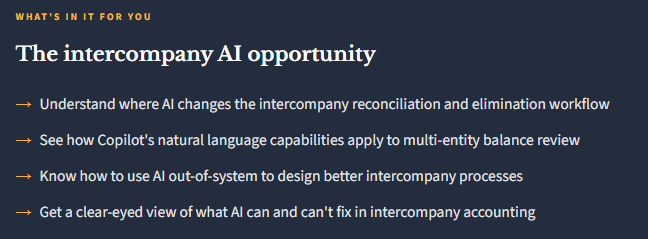
Intercompany accounting breaks down for a specific set of reasons that repeat across organizations of all sizes. Transactions are posted in one entity without a matching entry in the counterparty. Currency differences on intercompany balances aren’t handled consistently. The timing of when the selling entity and the buying entity record the same transaction differs. Elimination journal entries are built manually each period, creating version control and accuracy problems. And the people who understand the intercompany configuration are usually not the people running the close.
D365 Finance has strong native intercompany automation capabilities — automated counterparty posting, intercompany elimination company configuration, currency translation rules. The challenge is that most organizations don’t use all of it, and the ones who do still end up with exception-handling that’s manual and time-consuming.
Where AI Changes the Intercompany Picture
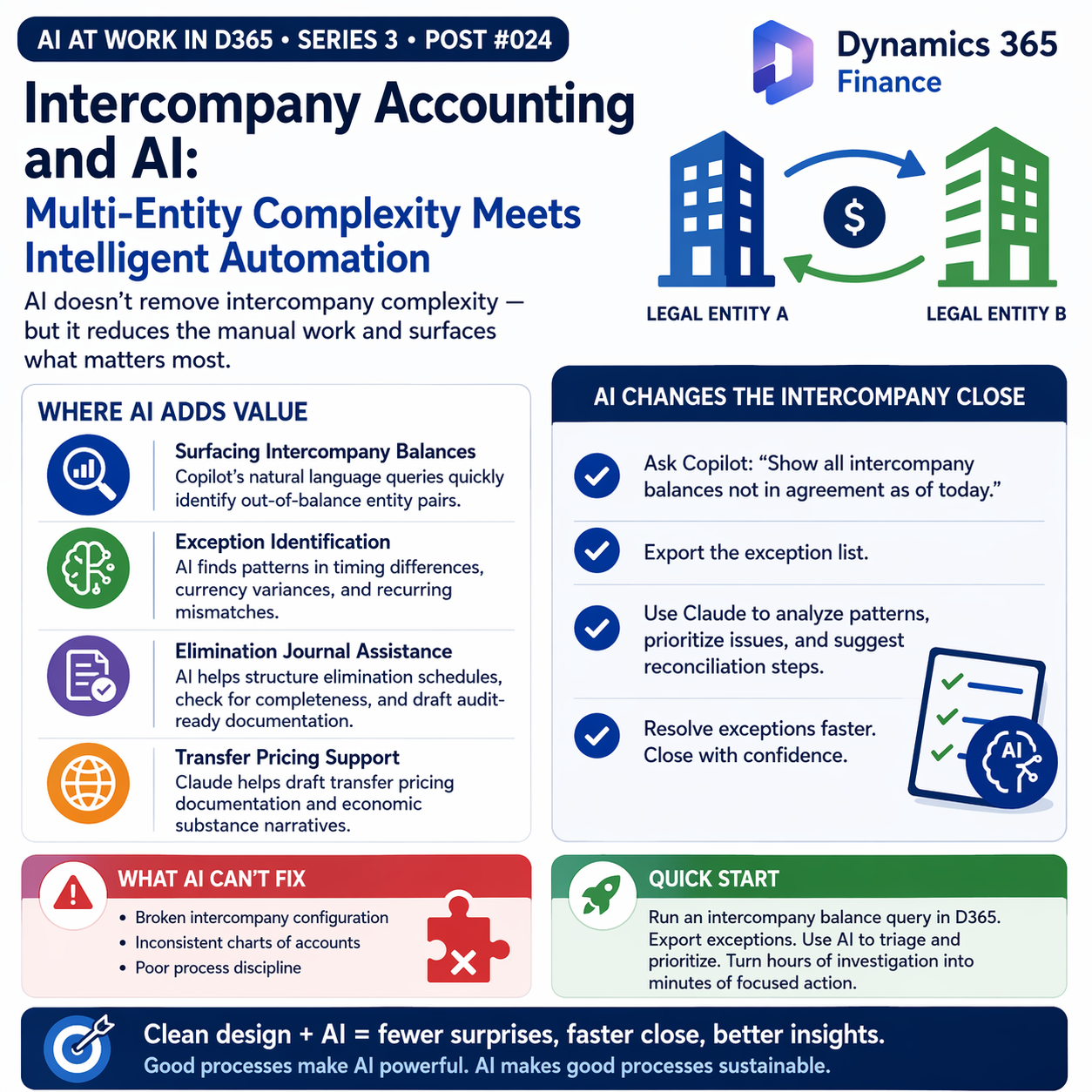
Intercompany balance surfacing. Copilot’s natural language query capability in D365 makes it faster to answer “show me all intercompany balances across legal entities that are not in agreement as of today.” That query used to require a custom report or a manual Excel pull from each entity. Getting to that answer in minutes rather than hours changes the close cycle dynamic.
Exception identification and pattern analysis. AI can identify which intercompany transaction types generate the most exceptions — same-day mismatches, currency variance patterns, specific intercompany codes that produce frequent reconciling items. That diagnostic is valuable input for a process improvement effort, which typically produces more durable value than any single AI feature.
Elimination journal assistance. For organizations running consolidation with manual elimination journals, AI tools (particularly Claude or the Finance Agent) can help structure the elimination schedule, check for completeness against the intercompany balance report, and draft the documentation that supports the elimination entries for audit purposes. This is primarily an out-of-system AI use case — the judgment work stays with the controller; the documentation and checking work benefits from AI assistance.
Transfer pricing documentation support. For multinational organizations with intercompany transactions that have transfer pricing implications, Claude can assist with the documentation work — structuring the analysis, drafting the economic substance narrative, and ensuring the documentation format is consistent across periods. Transfer pricing documentation has always been labor-intensive and is a natural fit for AI writing assistance.
What AI Can’t Fix in Intercompany
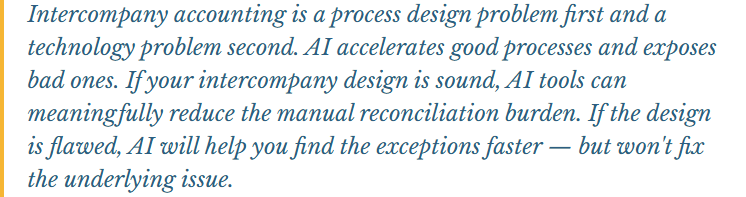
I want to be direct about this: AI cannot fix a fundamentally broken intercompany configuration. If entities are not set up with proper intercompany relationships in D365, if chart of accounts structures are inconsistent across legal entities, if the business doesn’t have clear rules about when intercompany transactions are initiated and confirmed — no amount of AI analysis turns that into a clean intercompany close.
The organizations I’ve seen get the most from AI in intercompany accounting are the ones who have done the configuration work properly and are using AI to manage the residual exception volume. Those residual exceptions are real, they accumulate, and they’re a legitimate use case for AI assistance.


📚 Go Deeper — Microsoft Resources
- Intercompany Accounting Setup in D365 Finance
- Consolidation and Elimination Overview
- Copilot in D365 Finance — Natural Language Queries
Intercompany accounting rewards organizations that invest in clean design and consistent process execution — and AI amplifies that investment. For organizations still reconciling intercompany manually every close, the question is whether to fix the process first or start using AI to manage the existing exceptions. The answer is usually both, in parallel.
BB
Bobbi Bricker
ERP Capability Lead and D365 Functional Architect at Centric Consulting. Former controller. This series reflects fifteen + years in ERP (as an end user and a Consultant) and a genuine belief that AI, used thoughtfully, makes finance and operations teams more capable — not less. Reach out with questions, pushback, or war stories from your own organizations.
Thank you for reading!
Interested in learning more? Below are some of my latest posts:
- Intercompany Accounting and AI: Multi-Entity Complexity Meets Intelligent Automation
- AI and Fixed Assets in D365: Smarter Capitalization, Depreciation, and Disposal
- AI in D365 Project Operations: From WBS to Margin Analysis
- AI and Cash Management in D365: Finance Insights, Payment Predictions, and the Treasury Opportunity
- Reading the Roadmap: Microsoft’s AI Vision for ERP in 2026–2027

Leave a Reply