
Post #009 – AI In Microsoft ERP
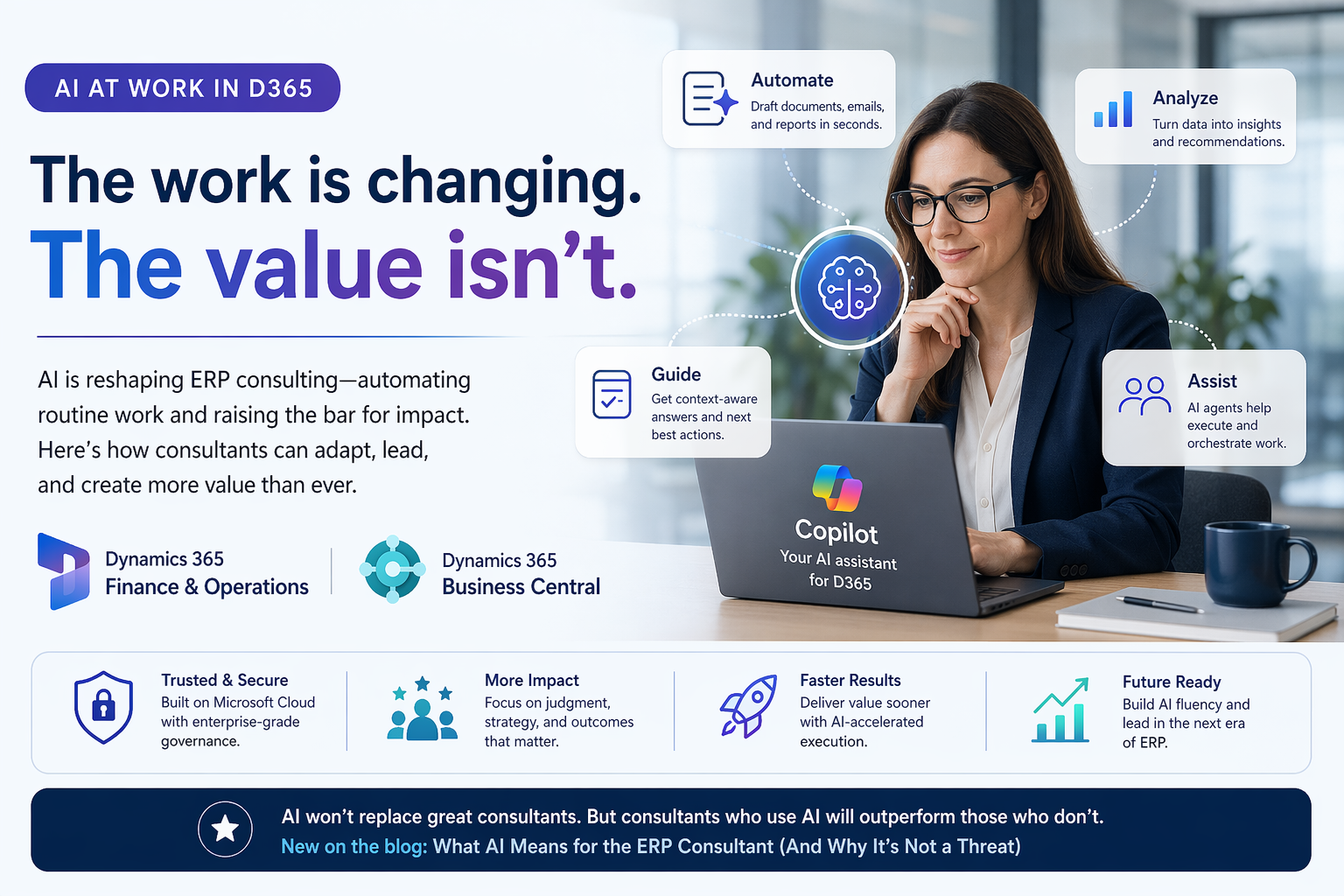
The work is changing. The value isn’t going anywhere. Here’s how I’m thinking about the shift — and what I’m doing about it.

What’s Actually Changing in Consulting Work
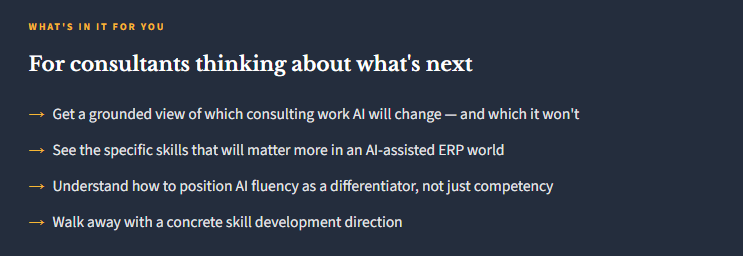
Let me be direct about the parts of consulting work that AI will genuinely reduce demand for. Documentation that used to take a day now takes two hours. First drafts of deliverables — process designs, training materials, SOW language — can be generated fast and refined rather than built from scratch. Some of the research and configuration reference work that junior consultants used to own is now assistable by AI. The time required to produce certain types of output is compressing.
That’s a real change. It affects utilization models, staffing ratios, and what junior-level project roles look like. Pretending otherwise is wishful thinking.
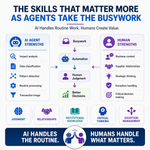
But here’s what that change doesn’t affect: the judgment work. The ability to walk into a chaotic client situation and understand what the real problem is. The experience to know when a configuration decision that seems technically correct will cause organizational pain. The relationship skills that make a client trust you when you deliver a finding they don’t want to hear. The ability to translate between the finance team’s language and the IT team’s language in real time. These things don’t compress with AI. If anything, they become more valuable as the execution work gets faster.
Shrinking in Value
- Document production time
- Configuration reference lookup
- First-draft deliverable creation
- Routine data extraction and formatting
- Basic training content writing
Growing in Value
- Process design judgment and architecture
- AI governance and readiness advisory
- Change management and adoption leadership
- Cross-functional translation
- AI implementation and agent configuration
- Exception analysis and outcome accountability
The New Consulting Skill Stack
If I were building my consulting practice from scratch today, here’s the skill stack I’d be developing intentionally:
- 🧭AI Fluency — Not Just Awareness
- There’s a difference between knowing that AI exists and knowing how to use it well in professional work. Effective prompting, understanding when to trust AI output and when to question it, knowing which tools are right for which tasks — these are practical skills, not theoretical ones. Develop them by using the tools, not just reading about them.
- ⚙️Agent Design and Configuration
- As agentic capabilities become a standard part of D365 implementations, consultants who understand how to design agent workflows, configure exception escalation paths, and test agent behavior will have a distinct advantage. This is a new implementation skill set that the market is just beginning to need.
- 🛡️AI Governance Advisory
- Every client deploying AI in their ERP needs help thinking through controls, audit trail requirements, data policy, and change management. This is a natural extension of the functional consulting skill set for anyone who’s done controls work — it just needs to be explicitly developed and positioned.
- 📐Process Design for AI-Augmented Workflows
- Designing processes where AI is a participant — not just a tool — is different from traditional process design. Exception flows, approval controls for AI-prepared transactions, monitoring and correction workflows — these require both AI literacy and deep process knowledge.
- 🗣️AI Adoption and Change Management
- The #1 reason AI implementations underdeliver isn’t technology — it’s adoption. People resist tools they don’t trust, don’t understand, or that feel like a threat to their role. Consultants who can lead change management specifically around AI adoption are addressing a real and underserved client need.

The Finance Background Advantage
I want to say something specific to the consultants who, like me, came from a finance background before moving into ERP work. That background is more valuable in an AI era, not less. Here’s why.
AI can generate a variance explanation. It can match an invoice to a PO. It can draft a journal entry narrative. What it can’t do is know whether that variance explanation is complete given this client’s specific business context, whether that invoice match looks right given what happened last quarter, or whether that journal entry narrative will satisfy an auditor who’s been around for 20 years. That judgment comes from having been the person on the other side of those decisions — and no amount of AI training changes that.
The finance-fluent ERP consultant is in an increasingly strong position: they can evaluate AI output with domain expertise, bridge the gap between finance teams and technology teams, and lead AI adoption conversations with credibility on both sides.
What the Role Actually Looks Like in Five Years
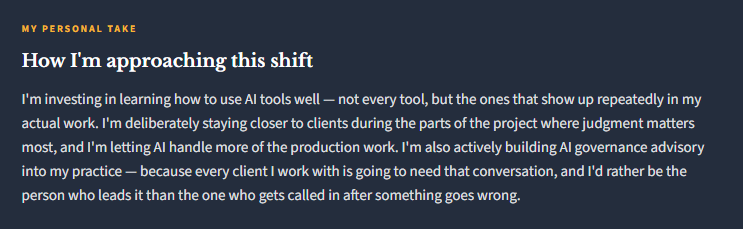
My best read on where the ERP consultant role heads over the next several years: the project team is smaller, faster, and more AI-assisted. Implementations take less time because configuration work moves faster with AI support. But the architects and senior consultants who design the solution, lead the client conversations, and own the outcome are more important, not less — because the speed of execution means that early design decisions have larger consequences.
The consultants who will struggle are the ones who resist AI tools while competitors use them to deliver faster and cheaper. And the consultants who will thrive are the ones who use AI to amplify their judgment, not to substitute for developing it in the first place.
The technology keeps changing. The need for people who can think, communicate, and make good decisions in complex situations doesn’t.
📚 Resources Worth Your Time
- Agents & Copilot Across D365 Apps — stay current on what’s live to advise clients
- Responsible AI — Copilot Studio — governance framework for client advisory
- DynamicsCon — the community that stays ahead of what’s actually changing in the Microsoft ecosystem
Bottom Line
AI is changing ERP consulting work. It’s compressing the time required for certain types of output, and it’s raising the bar for what “good work” looks like because the baseline is moving. That’s not a threat to experienced, judgment-oriented consultants — it’s an accelerant for the value they already provide.
The consultants who will be displaced are the ones whose value was primarily in doing rote work efficiently. The ones who will thrive are those who can think, advise, design, and lead — and who also know how to use AI to do the production work faster. That combination is the new standard.
Final post in this series is up next: Post 10 brings it all together with a practical AI ERP roadmap for every type of organization.
BB
Bobbi Bricker
ERP Capability Lead & D365 Functional Architect at Centric Consulting. Former controller. Practical by nature, curious by default. Writing about D365 F&O, Business Central, and now AI in ERP — because someone has to translate the tech into something finance teams can actually use.
Thank you for reading!
If you are interested in learning more, below are some of my latest posts:


Leave a Reply