
Tag: ERP


  • Power BI and Reporting Beyond Financial Reports

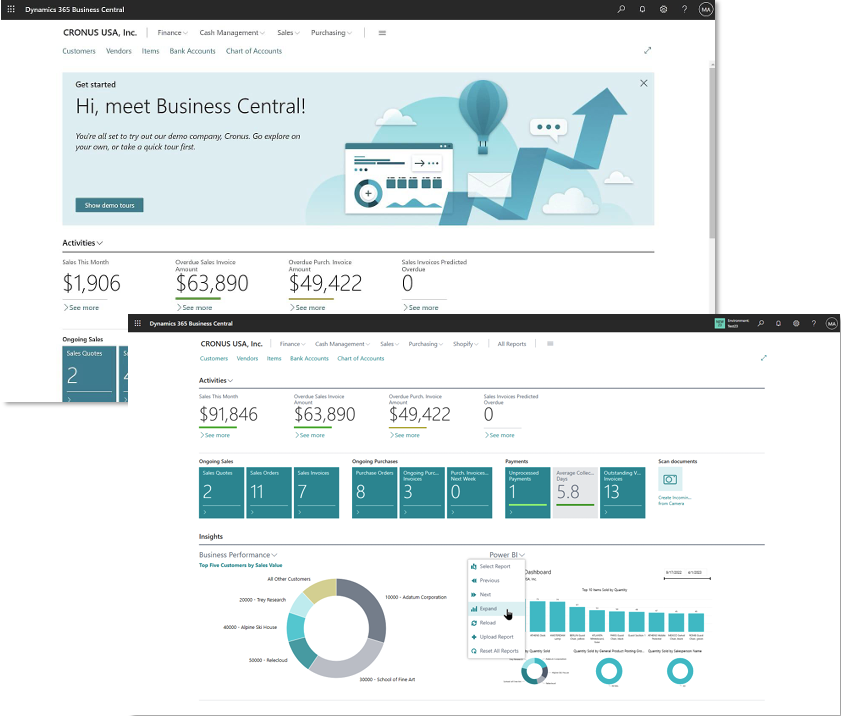
    Connecting Business Central to Power BI, the BC connector and its trade-offs, which questions belong in native BC reporting vs. a dedicated BI layer, building dashboards Finance and Operations can actually use, and the data freshness conversation every team needs to have before the first dashboard goes live. The BC Reporting Landscape — Four Tools,…

  • Global Finance and Multi-Currency Operations in D365 F&O

    The three-currency architecture, exchange rate types and where each applies, foreign currency revaluation and what it actually posts, realized versus unrealized gain and loss, the period-close currency controls Finance must own, and what breaks when the rate setup doesn’t match the accounting intent. The Three-Currency Architecture — What D365 Tracks on Every Transaction Every financial…

  • Manufacturing and Production Orders in Business Central

    Bill of materials, production orders, routings and capacity, costing methods for manufactured items, variance analysis, and the GL entries that happen when you build something instead of just buying it. What BC’s Manufacturing Module Covers BC’s Manufacturing module (available in BC Premium) handles discrete manufacturing — the process of building finished goods from component materials…

  • A Letter to the Controller Who Just Signed the Implementation Contract

    Everything this blog has covered, distilled into what Finance most needs to hear in the first week of a BC implementation—from the perspective of someone who has seen every mistake in this series made by smart, capable Finance teams who were given the wrong information or not given enough information at the right moment. Dear…

  • Advanced Warehouse Management in D365 F&O

    Directed put-away and pick, license plate tracking, wave and work management, location directives, the Finance implications of a WMS-enabled warehouse, and the reconciliation controls Finance must own when the warehouse runs on directed work rather than manual transactions. Basic vs. Advanced WMS — The Decision That Changes Everything D365 F&O supports two warehouse management approaches,…

  • Subscription Billing and Revenue Recognition in D365 F&O

    The Subscription Billing module, contract revenue schedules, ASC 606 / IFRS 15 mechanics, deferred revenue, the GL flow from contract inception through recognition, and the configuration decisions that produce an auditable revenue schedule — or require Finance to maintain a parallel spreadsheet for the next three years. The ASC 606 / IFRS 15 Framework —…

  • Expense Management in D365 F&O

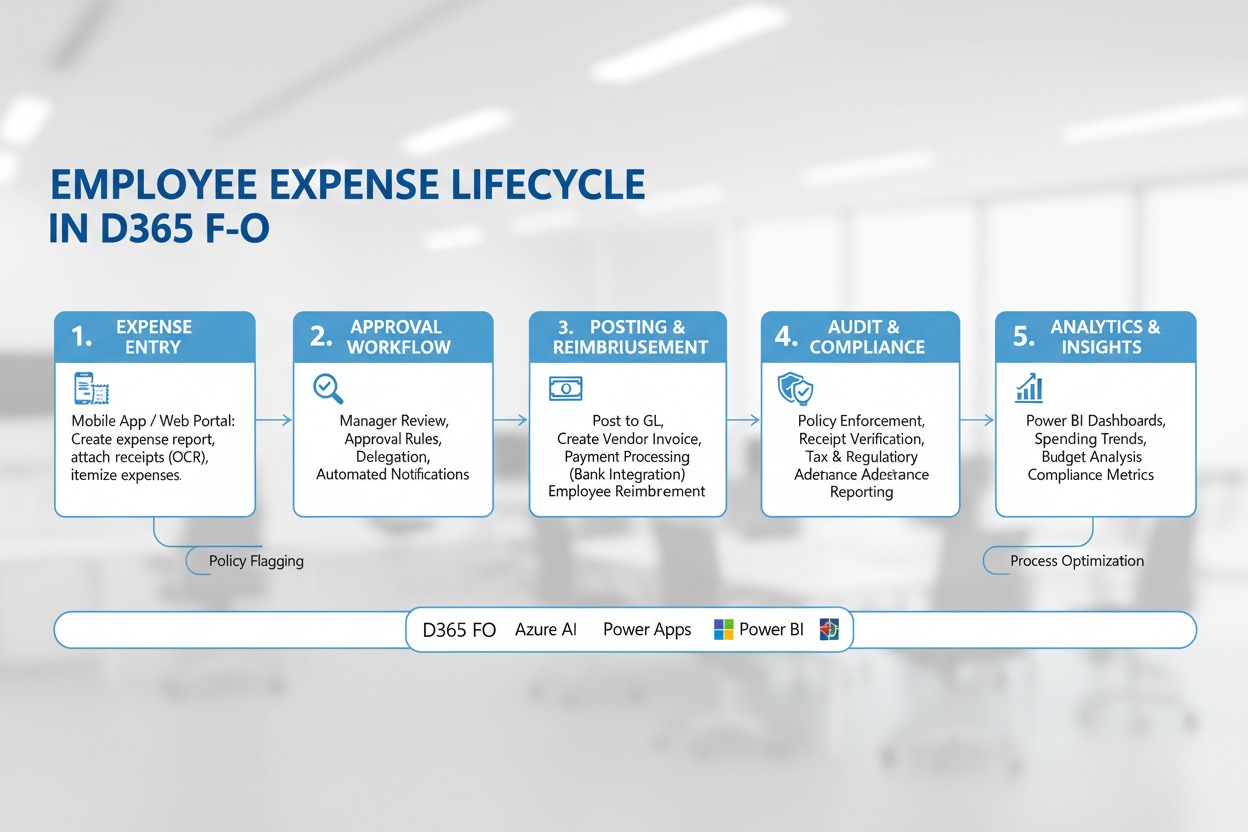
    Expense categories, per diem, expense policies, the full GL flow from report submission to ledger posting, project-coded expenses, corporate card integration, and the approval and audit controls that keep T&E from becoming the line item internal audit always finds something in. The Expense Management Structure — What Finance Owns at Setup The D365 F&O Expense…

  • Tax Configuration in D365 F&O

    The sales tax engine, tax groups and item tax groups, the intersection model, VAT for multi-country implementations, withholding tax, tax-exempt scenarios, and the configuration mistakes that produce financial statement misstatements that survive undetected until a tax authority asks questions. The D365 F&O Tax Engine — How It Decides What Rate to Apply D365 F&O determines…

  • Manufacturing and Production Orders in D365 F&O

    Bill of materials, routing, production order costing, WIP accounting, standard cost variance analysis, and the Finance-owned configuration decisions that determine whether manufactured goods inventory is accurately valued and variance accounts tell a useful story. The Finance Scope in Manufacturing: What You Own Before Production Starts D365 F&O’s manufacturing module involves configuration owned by multiple functions…

  • Purchasing and Supply Chain in Business Central

    Purchase orders, vendor catalogs, item charges, receipt and invoice matching, blanket orders, and the procurement configuration decisions that determine whether your AP close is clean or chaotic. “Post 4 in this series covered the AP end of purchasing — vendor ledger, invoice posting, payment runs. This post is about what happens before the invoice arrives.…